
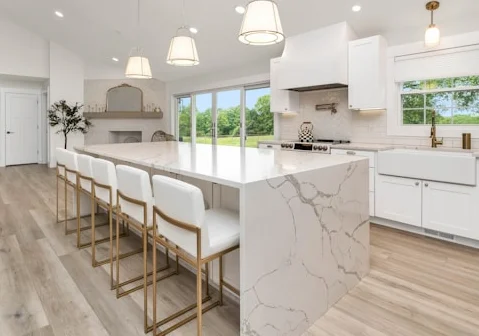
A practical, experience-based guide for homeowners living with marble in the Southeast
If you own marble countertops in Atlanta, you already know they behave differently than they might in a drier climate like Phoenix or Denver. Georgia’s thick, sticky humidity especially from May through September changes how marble ages, how quickly it dulls, and how often it needs professional attention. This guide walks through exactly why that happens, how to recognize the warning signs, and a realistic polishing schedule based on real-world use, stone care experience, and the chemistry of marble itself.
At Georgia Marble Services, we work with Atlanta homeowners on exactly this kind of stone maintenance year-round, so the guidance below reflects what we consistently see in local kitchens and bathrooms not just general industry advice.
Why Marble Behaves Differently in Atlanta Than Elsewhere?
Marble is a metamorphic rock composed primarily of calcium carbonate the same mineral found in limestone, chalk, and seashells. That composition is what gives marble its beautiful veining and soft luminosity, but it’s also what makes it chemically reactive and physically porous.
Atlanta’s climate creates a specific set of stressors for this material:
- High ambient humidity (often 60–80% in summer) means moisture in the air is constantly being drawn into the stone’s microscopic pores, even when nothing is spilled on the surface.
- Frequent afternoon storms raise indoor humidity further when doors and windows are opened, and they increase condensation on cool stone surfaces, particularly near sinks and exterior walls.
- Air conditioning cycling creates repeated temperature swings between the stone and the surrounding air, which can affect how sealers cure and how quickly moisture evaporates back out of the pores.
- Pollen season, unique to Atlanta’s tree-heavy landscape, adds a fine, slightly acidic dust that settles on kitchen and bathroom surfaces and works its way into unsealed or under-sealed marble.
None of these factors damage marble on their own in a single afternoon. The problem is cumulative: humidity keeps the stone’s pores in an almost constant state of moisture exchange, which accelerates every other type of wear the marble experiences.
How Marble Actually Becomes Dull: The Science Behind It?
To understand why polishing matters, it helps to understand what “dullness” actually is at a material level. Marble doesn’t get dull the way wood loses its stain it loses its polished crystalline surface. Here’s how that happens:
1. Acid Etching
Because marble is calcium carbonate, it reacts chemically with anything acidic lemon juice, vinegar, wine, coffee, tomato sauce, and even some cleaning products. The acid dissolves a microscopic layer of the polished surface, leaving a dull, sometimes cloudy patch called an “etch mark.” In humid conditions, acidic spills sit on the surface longer before evaporating, giving the reaction more time to work into the stone.
2. Moisture Absorption and Micro-Erosion
Marble’s porous structure means it absorbs and releases moisture constantly. In a humid environment like Atlanta, this exchange never fully stops, even overnight. Over months and years, this constant micro-movement of water through the stone’s surface layer gradually wears down the fine crystalline structure that gives marble its shine, resulting in a soft, matte haze across high-traffic areas.
3. Surface Abrasion
Everyday contact sliding pans, cutting directly on the stone, dragging appliances, or even abrasive sponges scratches the surface at a microscopic level. These scratches scatter light instead of reflecting it cleanly, which is what a polished shine actually is: light bouncing evenly off a flat, dense crystal surface.
4. Sealer Breakdown
Sealer is not a permanent shield; it’s a topical or penetrating treatment that wears away over time, and humidity accelerates this breakdown. Once the sealer degrades, the stone underneath is exposed to moisture, oils, and acids more directly, which speeds up both etching and staining.
5. Hard Water and Mineral Deposits
Atlanta’s water supply, like much of the Southeast, carries mineral content that leaves behind a faint film on marble surfaces near sinks and wet bars. Over time this film builds into a cloudy residue that dulls the reflective quality of the stone, particularly if water is left to air-dry on the surface rather than being wiped down immediately.
Why Marble Needs Polishing (Not Just Cleaning)
Cleaning and polishing solve two different problems, and homeowners often use the terms interchangeably when they shouldn’t:
- Cleaning removes surface dirt, grease, and residue. It does not restore shine or repair etching.
- Polishing restores the physical surface of the stone either by buffing with a marble-safe polishing compound or, for deeper etching and dullness, by mechanically re-honing and re-polishing the top layer of stone with diamond abrasive pads.
A countertop can be spotlessly clean and still look dull, foggy, or scratched, because the damage is structural to the surface, not just a layer of grime sitting on top. This is the core reason polishing is a periodic maintenance task, not a one-time fix the surface itself is slowly being worn down by daily use and by the humidity-driven chemical and physical processes described above.
So, How Often Should You Polish?
There’s no single universal answer, because it depends on usage intensity, sealing history, and location within the home. Based on general stone-care industry guidance and the accelerated wear patterns humid climates like Atlanta’s produce, here’s a realistic breakdown:
Kitchen Countertops (High Use)
- Professional polish/re-honing: Every 12–18 months
- Sealer reapplication: Every 6–12 months (humidity shortens sealer lifespan compared to drier climates)
- Light buffing/spot maintenance: As etch marks appear, ideally within days of noticing them
Kitchens see the most acid exposure (citrus, wine, sauces) and the most water contact, making them the fastest area to dull in a humid environment.
Bathroom Vanities and Wet Bars (Moderate Use)
- Professional polish: Every 18–24 months
- Sealer reapplication: Every 12 months
- Bathrooms combine humidity from showers with daily product spills (toothpaste, perfume, cleaning sprays), many of which are mildly acidic or abrasive.
Low-Traffic Surfaces (Fireplace surrounds, display tables, accent surfaces)
- Professional polish: Every 2–3 years
- Sealer check: Annually, even with minimal use, because ambient humidity alone continues to affect the stone
Signs You Need Polishing Sooner Than Scheduled
Regardless of the general timeline, watch for these indicators that your marble needs attention now rather than later:
- Water no longer beads on the surface and instead soaks in within a minute or two (a sign the sealer has failed)
- Visible dull or cloudy patches, especially near the sink, stove, or coffee station
- Rough or slightly gritty texture when you run a hand across the surface
- Faint ring marks left behind after cups or bottles are removed
- An overall loss of reflectivity the countertop looks “flat” rather than glossy, even right after cleaning
What Homeowners Can Do Between Professional Polishes?
Professional polishing restores the surface, but good daily habits significantly extend the time between those appointments which matters in a climate working against you.
- Wipe up spills immediately, especially anything acidic, rather than letting them sit even briefly
- Use coasters and trivets for glasses, bottles, and hot cookware
- Avoid vinegar-, lemon-, or bleach-based cleaners, and use only a pH-neutral stone cleaner
- Dry the surface after cleaning rather than letting water air-dry, which reduces mineral film buildup
- Run a dehumidifier or ensure good kitchen ventilation during Atlanta’s peak humidity months to reduce the constant moisture load on the stone
- Test your sealer every few months by dripping a small amount of water on the surface; if it doesn’t bead within a few minutes, it’s time to reseal
When to Call a Professional vs. DIY
Light surface buffing with a marble-specific polishing powder can be done by homeowners for very minor dullness. However, true re-polishing especially after visible etching, scratching, or a long stretch without maintenance requires diamond abrasive pads and controlled technique. Done incorrectly, DIY polishing can create uneven sheen, low spots, or “orange peel” texture that’s difficult to correct without professional-grade equipment. For most Atlanta homes, an annual or biennial professional visit paired with careful daily habits is the most reliable way to keep marble looking its best year-round.
This is where working with a local specialist makes a real difference. Georgia Marble Services (georgiamarbleservices.com) provides professional marble polishing, honing, and sealing throughout the Atlanta area, with technicians who understand exactly how the region’s humidity, pollen, and water conditions affect stone over time. Rather than a one-size-fits-all national schedule, our team assesses each countertop’s wear pattern and sealer condition on-site and recommends a maintenance plan built around Atlanta’s climate specifically.
Frequently Asked Questions
How often should marble countertops be polished in Atlanta?
Kitchen marble countertops in Atlanta should be professionally polished every 12–18 months due to high humidity, acid exposure, and daily use. Lower-traffic marble surfaces, such as bathroom vanities or accent tables, can typically go 18–24 months or longer between polishes.
Does humidity really make marble dull faster?
Yes. Atlanta’s high humidity keeps marble’s porous surface in a near-constant state of moisture absorption and release. This ongoing moisture exchange gradually wears down the stone’s polished crystalline layer, causing it to look hazy or matte faster than it would in a drier climate.
What’s the difference between cleaning and polishing marble?
Cleaning removes dirt, grease, and surface residue but does not repair etching or restore shine. Polishing physically restores the stone’s surface using buffing compounds or diamond abrasive pads, correcting the dullness and etch marks that cleaning alone cannot fix.
How do I know if my marble countertop needs polishing?
Common signs include water no longer beading on the surface, visible cloudy or dull patches, a slightly rough or gritty texture, faint rings left by cups or bottles, and an overall loss of reflectivity even right after cleaning.
Why does marble get dull or cloudy in the first place?
Marble dulls due to acid etching from foods like citrus, wine, and vinegar; constant moisture absorption in humid climates; surface scratches from daily use; breakdown of protective sealer over time; and mineral film left behind by hard water.
How often should marble countertops be resealed in a humid climate?
In Atlanta’s humidity, marble kitchen countertops typically need resealing every 6–12 months, while bathroom vanities and lower-use surfaces can usually be resealed annually. A simple water-bead test every few months will confirm whether the sealer is still effective.
Can I polish marble countertops myself?
Homeowners can safely use a marble-specific polishing powder for very light dullness, but true re-polishing after visible etching or scratching requires diamond abrasive pads and professional technique. Incorrect DIY polishing can create uneven sheen or surface texture issues that are harder to fix later.
What causes etch marks on marble countertops?
Etch marks are caused by acidic substances such as lemon juice, vinegar, wine, coffee, and tomato-based foods reacting with the calcium carbonate in marble and dissolving a microscopic layer of the polished surface, leaving a dull or cloudy mark.
Is marble a good choice for kitchens in humid climates like Atlanta?
Marble can still be a great choice in humid climates, but it requires more consistent maintenance than in drier regions. With regular sealing, prompt cleanup of spills, and periodic professional polishing, marble countertops can stay beautiful long-term even in Atlanta’s humidity.
The Bottom Line
Atlanta’s humidity doesn’t just make marble maintenance more frequent it changes why the stone dulls in the first place, accelerating both the chemical reactions (etching, mineral film) and the physical wear (micro-erosion, sealer breakdown) that lead to a lackluster surface. For most households, that translates to a professional polish roughly once a year for kitchens and every 18–24 months for lower-traffic marble surfaces, with sealer checks happening more often in between. Staying ahead of these signs — rather than waiting for the countertop to look visibly worn is the difference between marble that ages gracefully and marble that needs costly restoration work down the line.
If your marble countertops are showing signs of dullness, etching, or a failing sealer, Georgia Marble Services offers professional polishing and stone care throughout Atlanta and the surrounding area. Visit georgiamarbleservices.com to schedule an assessment and get a maintenance plan tailored to your countertops and your home’s specific conditions.


