
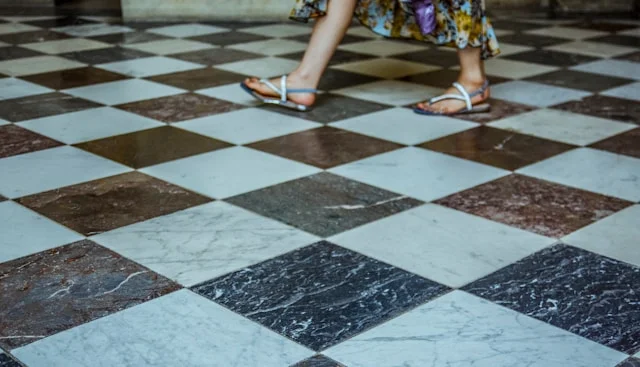
Marble is a common flooring choice in Atlanta homes and commercial lobbies. Stone contractors across metro Atlanta see the same pattern repeatedly: marble that looked flawless at installation starts to dull, haze, or develop cloudy patches within a few humid summers. That’s not a manufacturing flaw or bad luck it’s a predictable reaction between a porous natural stone and the local climate.
This guide covers why that happens, how to spot early damage, how to protect marble floors going forward, and what professional polishing actually does to reverse humidity damage once it occurs.
Climate figures cited below are drawn from NOAA-sourced and long-term meteorological averages for Atlanta, Georgia; stone-care recommendations reflect standard practices used in the natural stone restoration industry.
Atlanta’s Climate Is Genuinely Hard on Natural Stone
Atlanta sits in a humid subtropical climate zone (Köppen classification Cfa), meaning there is no true dry season. A few facts explain why this matters for stone flooring:
- Relative humidity regularly runs high. Monthly averages swing from roughly 61% in the driest month to 75% in August, with morning readings in summer frequently climbing above that.
- Summers are hot, muggy, and prone to sudden thunderstorms, often pushing daytime highs into the upper 80s to low 90s (°F) while humidity stays elevated well into the evening.
- Rainfall is heavy and spread throughout the year, with the city averaging around 50 inches of precipitation annually and no extended dry stretch to let building materials fully dry out.
- Indoor humidity often creeps above the EPA’s recommended 30–50% comfort range unless a home’s HVAC or dehumidification system is actively managing it, especially in older houses or homes with crawl spaces.
None of that is a problem for tile, vinyl, or sealed hardwood. It’s a specific problem for marble, because of what marble actually is.
The Chemistry: Why Humidity Attacks Marble Specifically
Marble is metamorphosed limestone, composed almost entirely of calcium carbonate. Two properties make it uniquely vulnerable to a humid environment:
- It’s porous, even when polished. A glossy marble floor looks sealed, but the surface is full of microscopic pores. In a low-humidity climate, moisture that gets into those pores evaporates quickly. In Atlanta, ambient moisture in the air — and moisture wicking up from slabs, subfloors, or crawl spaces has far fewer opportunities to fully evaporate. Water sits in the stone longer, which is the root cause of almost every humidity-related marble problem.
- Calcium carbonate is chemically reactive to moisture and mild acidity. Persistent dampness slowly dissolves and redeposits minerals within the stone, and airborne moisture often carries mild acidity (from pollution, cleaning residue, or organic matter) that etches the calcite surface. This is a chemical reaction, not surface dirt which is why it can’t be scrubbed away.
Combined, these two properties explain the specific damage patterns homeowners see:
- Dulling and haze — trapped moisture and mineral migration scatter light across the surface instead of reflecting it cleanly, so the floor loses its mirror-like shine.
- Efflorescence — a white, powdery, salt-like film that appears when moisture travels through the stone and evaporates at the surface, leaving dissolved minerals behind. This is extremely common in Atlanta basements and ground-floor rooms with poor subfloor ventilation.
- Etch marks and soft spots — ring-shaped or cloudy blemishes where localized moisture (condensation from a humid room, a damp rug, a leaking planter) sat on the stone.
- Grout and seam discoloration — humidity trapped at joints promotes mildew growth, which stains the surrounding stone.
- Micro-cracking over time — repeated humidity swings (a very humid July followed by a drier, HVAC-conditioned winter) cause the stone to expand and contract slightly. Over years, this cycling stresses hairline fissures already present in the marble, especially at seams and edges.
Homes with crawl spaces, finished basements, or bathrooms and sunrooms with high ambient moisture see this fastest, but any Atlanta home with marble is exposed to some degree.
How to Protect Marble Floors From Atlanta Humidity
Most humidity damage is preventable with a maintenance routine suited to Atlanta’s climate, rather than a generic stone-care checklist written for a drier region.
Reseal on a climate-appropriate schedule. A quality penetrating sealer fills the stone’s pores and slows moisture absorption. In most U.S. climates, marble is resealed every 1–2 years; in Atlanta’s humidity, many professionals recommend checking the seal annually and resealing every 12–18 months, especially in bathrooms, entryways, and below-grade rooms.
Control indoor relative humidity. Keeping indoor humidity in the 40–50% range using your HVAC system, a dehumidifier in problem rooms, or a whole-home dehumidifier does more to protect marble than any surface treatment. A basic hygrometer is an inexpensive way to monitor this room by room.
Improve subfloor and crawl-space ventilation. A large share of efflorescence and soft-spot damage in Atlanta comes from moisture rising through the slab or crawl space, not from spills. A vapor barrier, proper crawl-space ventilation, or French drains around the foundation address the source rather than the symptom.
Wipe up standing water and condensation immediately. Humid air condenses readily on cool stone near AC vents, windows, or exterior doors. Don’t let puddles or damp mats sit on marble.
Use pH-neutral, stone-safe cleaners only. Vinegar, citrus cleaners, and most all-purpose sprays are acidic enough to etch calcium carbonate, and this damage compounds with humidity-related softening of the surface.
Use mats and pads under planters, rugs, and furniture. Anything that traps moisture against the stone a damp doormat, an unglazed ceramic planter creates a localized humidity problem even in a well-ventilated room.
Signs Your Marble Already Has Humidity Damage
Before assuming a floor needs full restoration, look for these indicators:
- A dull, cloudy, or “foggy” finish that used to be glossy
- White powdery residue that returns after cleaning (efflorescence)
- Faint ring or cloud-shaped etch marks, often near entryways, plant stands, or bathroom fixtures
- Grout lines or seams with gray or black discoloration
- A rough or slightly pitted feel when you run a hand across the surface
Any of these point to moisture interacting with the stone’s surface chemistry and all of them are fixable with professional polishing and, where needed, honing.
How Professional Polishing Reverses Humidity Damage
Once damage has occurred, cleaning products can’t restore shine because the problem isn’t dirt it’s the physical and chemical condition of the stone’s top layer. Restoration works by removing and rebuilding that layer. A typical professional process looks like this:
- Assessment and moisture check. A qualified technician evaluates whether the damage is cosmetic (surface haze, light etching) or structural (deep pitting, cracking, active moisture intrusion). This step also identifies whether an underlying moisture source needs to be fixed first polishing over an active leak or unventilated crawl space only delays the same damage from returning.
- Honing. For etching, pitting, or uneven wear, the surface is mechanically ground down with progressively finer diamond abrasive pads. This removes the damaged top layer of stone and creates a flat, even surface — the same principle as sanding wood before refinishing.
- Polishing compound application. A stone-specific polishing compound typically a fine abrasive, sometimes paired with a chemical “crystallization” treatment is worked into the surface with a floor machine. This step restores reflectivity and evens out the finish left by honing. Some products marketed as crystallizers leave a hard surface film rather than truly altering the stone; a reputable contractor can explain which method they use and why.
- Buffing to final gloss. Progressively finer polishing pads bring the surface back to a high, even shine, matching or exceeding the original finish.
- Sealing. A fresh penetrating sealer is applied immediately after polishing, while the stone’s pores are clean and open, giving the best possible protection against the next humid season.
- Addressing the moisture source. A responsible contractor will also flag ventilation, drainage, or HVAC humidity issues so the same damage doesn’t reappear in 12 months.
Light haze and mild etching are often correctable in a single visit. Deeper pitting, efflorescence that has penetrated below the surface, or stone affected by long-term moisture intrusion may require multiple honing passes and, in rare cases, partial tile replacement.
DIY vs. Professional Restoration
Homeowners can safely handle prevention — sealing, cleaning, and humidity control. Actual polishing and honing are best left to professionals for a simple reason: the diamond-grit sequence and polishing compounds have to match the specific marble type and the severity of damage, and over-honing removes material permanently. A misjudged DIY attempt with the wrong pad grit or an acidic “polish” product can etch the stone further rather than restore it. For anything beyond light surface cleaning, a licensed stone restoration company with local experience in Atlanta’s humidity conditions will get a better, longer-lasting result.
Frequently Asked Questions
Does humidity really damage marble floors, or is it just a myth?
It’s real, not a myth. Marble is porous calcium carbonate, so moisture from the air and subfloor gets absorbed into the stone rather than evaporating quickly. Over time this causes dulling, white mineral deposits (efflorescence), and etching chemical and physical changes, not just surface dirt.
Why is Atlanta specifically bad for marble floors?
Atlanta has a humid subtropical climate with no true dry season, average relative humidity in the 60–75% range, and roughly 50 inches of rain a year. That constant moisture, combined with hot, muggy summers and cooler, HVAC-dried winters, keeps marble cycling between damp and dry more than it would in an arid climate.
What does humidity damage look like on a marble floor?
Common signs include a cloudy or “foggy” loss of shine, white powdery residue that keeps coming back after cleaning, faint ring-shaped etch marks, discolored grout or seams, and a slightly rough or pitted feel to the surface.
Can I fix a hazy or dull marble floor myself?
Light dulling from dust or residue can sometimes be improved with a pH-neutral stone cleaner and a soft microfiber pad, but true haze from etching or moisture absorption requires honing and polishing with diamond abrasives a process that needs professional equipment and expertise. DIY acidic “polish” products often make etching worse.
How often should marble floors be sealed in a humid climate like Atlanta’s?
Most professionals recommend resealing every 12–18 months in Atlanta, compared with every 1–2 years in drier climates, and checking high-moisture rooms (bathrooms, entryways, below-grade spaces) more often.
What is efflorescence on marble, and is it dangerous?
Efflorescence is a white, salt-like film that forms when moisture travels through the stone and evaporates at the surface, leaving dissolved minerals behind. It’s not structurally dangerous on its own, but it signals ongoing moisture movement through the slab or subfloor that should be addressed, or the deposits will keep returning.
Can marble floor damage from humidity be permanent?
Surface-level dulling, etching, and efflorescence are almost always correctable through honing and polishing. Damage becomes harder to fully reverse only when moisture exposure has continued for years, causing deep pitting or cracking in those cases some tile replacement may be needed alongside polishing.
Does air conditioning help protect marble floors?
Yes. A well-maintained HVAC system is one of the most effective ways to protect marble, since it keeps indoor relative humidity closer to the recommended 40–50% range. Homes where the AC isn’t keeping up, or that lack a dehumidifier in problem rooms, see faster stone damage.
How much does it cost to polish a marble floor?
Cost depends on square footage, the severity of damage, and whether honing (not just polishing) is needed, so pricing varies significantly by contractor. Getting an in-person assessment and quote from a local stone restoration company is the most reliable way to get an accurate number.
How can I tell if my marble floor needs honing or just polishing?
Polishing alone restores shine when the surface is intact but dull. Honing is needed when there’s visible etching, pitting, or unevenness, since it grinds away a thin damaged layer before the polish step. A stone restoration technician can usually tell within minutes of an in-person inspection.
The Bottom Line
Atlanta’s humid subtropical climate high year-round moisture, heavy rainfall, and seasonal humidity swings creates conditions that steadily dull, etch, and weaken marble’s porous, chemically reactive surface. The damage is real, but it’s also well understood and highly treatable: consistent sealing, indoor humidity control, and prompt attention to standing moisture prevent most problems, and professional honing, polishing, and resealing restore marble that’s already been affected. Floors properly protected and periodically restored can keep their shine for decades, even in Atlanta’s climate.


